Latest episode
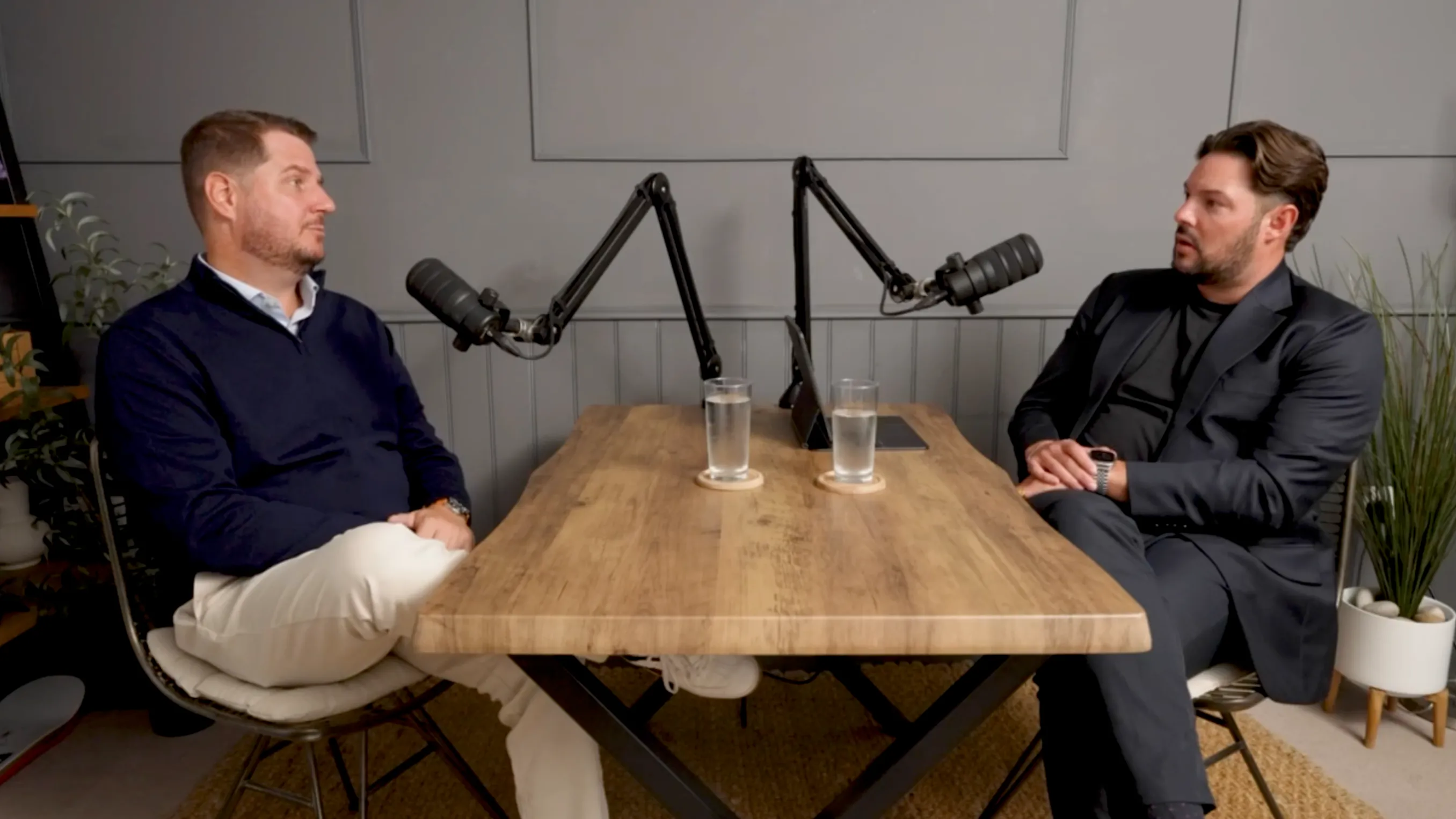
Brad has worked on more than 50 FP&A implementations over 17 years. In this 7 minute episode he explains why the team and the process come before the tool.
 7 minute episode
Alex and Brad on what an FP&A implementation needs first
An FP&A implementation moves a group's budget, forecast and plans onto new software, and the work weighs on the finance team more than most expect. Brad, founder and COO of Constancia, an EPM consultancy, says the team's capacity and skills decide the result.
The team needs the time and the skills to run the project, because the work weighs more than most heads of FP&A expect.
Brad finds a planning tool is well received when the finance team owns it from the start.
Each country or division plans in its own way, and the group needs to know how before it designs 1 process for all of them.
A group tool forced onto divisional planning gets fought, so the link between group and division has to be designed.
Alex and Brad spoke recently to a global client with 50 countries, each planning in a slightly different way.
The group wanted 1 set of drivers for everyone, but the countries held data of different quality and ran processes nobody at group had mapped.
Brad has seen the result many times, with countries planning offline and loading the numbers in, so the new tool gains the group nothing.
Alex says FP&A teams want the answer yesterday, and they judge a new planning tool on how soon it pays back.
Brad runs FP&A implementations on a hybrid agile method, with the tool going live in stages so the risk stays under control.
He warns that group and country mandates rarely match, and a team that moves fast without knowing what it is changing ends up fighting the tool.
Alex puts the same point to any CFO or VP of FP&A looking at working capital or the cash position, where the technology is only part of the answer.
Our consultants start by building the tool, then bring the finance team in as co-build partners while the project runs.
By the end, the finance team builds, owns and manages the tool, and makes further changes itself.
Alex0:03Most FP&A implementations don't fail because of the technology, do they? So Brad, let's walk through it. This is your area, right? I've got a couple of questions for you. You've spent the last 17 years doing this, and you've worked on over 50 of these. These are financial planning and analysis transformations.
Alex0:24I'm a CFO, or I'm a head or VP of finance, and I come to you. My question is, we're looking at these 3 tools, can you help us decide on which one? What would your approach be to that question? It's a broad question, right?
Brad0:42Yes, indeed. I suppose I would say that with any planning implementation, you have to look at what you've got in terms of capacity and skill set within your team. Make sure that translates to what you're trying to do as head of FP&A, before you even look at any tooling.
Brad1:03Tooling is an enabler to a process. It's an enabler to a business. It's not necessarily the silver bullet that's going to drive the change you're looking for. You need to really understand where you are as a team, and make sure you are fit for purpose for any implementation.
Brad1:25The reason I say that is these implementations are a lot heavier, in terms of a burden on your team, than you might expect. That's particularly true if you want the tool to be well received within your team and your organisation. You need that ownership of the tool within the team to drive the change, before you can even look at the tooling.
Alex1:48Absolutely.
Brad1:49You know what I mean? Any change management approach is quite heavy-handed in any implementation, so that's 1 thing you've got to keep in mind.
Alex1:59I couldn't agree with that more. You and I were talking to a client just the other week, weren't we? One of the things they said was, we're running this FP&A transformation, this planning transformation. And we've already got the drivers we're going to base it on.
Alex2:25And our thought process on this, and I'd love you to expand on it for me, was that they're determining the drivers for the rest of the business.
Brad2:35Exactly. They're a global company with 50 different countries planning in slightly different ways. They want to drive this change from a group perspective, thinking it's going to be one size fits all. That's not the case, right? They've got different data sets at different levels of cleanliness, which is the best word to use there. And they don't really understand what their processes are in country.
Brad3:03So you can drive a change from the top, but I've seen this happen over and over again. All that ends up happening is they plan offline and load it into the system. Then there's no process efficiency or technology gain, because they haven't thought about what the people in country really want to do.
Brad3:20That goes back to my point about understanding what you have in your organisation. Is your team capable of driving this change?
Alex3:30That's a really interesting point right now.
Brad3:33Yeah. People always want to do things at speed, but they don't always understand what they're changing and why. Then there's a group mandate versus an in-country mandate, and those 2 very rarely correlate. So it's 1 of those things you've got to be very careful of.
Brad3:49We also see this a lot of the time. I know I'm taking a bit of time to explain this, but...
Alex3:54I hope you are.
Brad3:58A lot of the time, what ends up happening is you'll have a group-led FP&A tool. Then countries or divisions will have their own planning tool, and the 2 will talk to each other.
Brad4:10Trying to make that group tool fit into the in-country or divisional planning processes, I don't think that's always correct. All that happens is people fight against it. So it's getting that architecture right, you know what I mean?
Alex4:23You touched on something I've been holding on to. Anybody that knows me knows I would have loved to jump in on a topic you just talked about, but I waited, because that's polite.
Brad4:36Thanks. Thanks.
Alex4:37So 1 of the things that really grabbed me there was speed. You talked about speed. I always say, and whoever's listening to this, seriously, this is mine, you can't take it, FP&A people are worse than sales. They want to know exactly what's happening and they want the answer yesterday.
Brad4:59Yes.
Alex4:59They're worse than a sales rep, right? We all know what they can be like. So talk to me about the word speed. When I think of speed in an FP&A implementation versus a consolidation implementation, I think to myself, time to value.
Alex5:17Now, you're an expert at this, and we're going through this right now. How can you reach that value for the business whilst also maintaining the financial operating model transformation? Talk to me about the iterative release methods an FP&A stakeholder should start to think about, while looking at the technology and its ability to go live in an agile manner.
Brad5:46As you know, we at Constancia are firm believers in a hybrid agile method. Really, that's a mechanism to manage the risk of your implementation and to drive change efficiently.
Brad6:05Essentially, we start out building the tool for you, and slowly bring you in as a co-build partner. By the end of the project, you're efficient at building, owning and managing the toolset, and you're also the driver of change within your organisation.
Brad6:22So we enable you as an FP&A organisation to take your skill set and this tooling and drive that change within the organisation as you see fit. We're always looking at risk and change alongside the tooling, to make sure we drive that change efficiently.
Alex6:47Yeah. It's a tongue twister. I believe I'm with you there.
Alex6:51No, but honestly, let's think about this. If you're a CFO or a VP of FP&A, you're looking to optimise or reinvest your working capital, and you're looking to understand your cash position. Reach out to us, because that's what we're working with people on, and it's not about the technology all the time. So let's rationalise it, and we look forward to speaking to you about it.
Brad7:13True.
Our FP&A implementation service starts with the data model and ends with your team running the tool.
Read the serviceFP&A covers the budget, the forecast and the board's scenarios, and the explainer sets out each one.
Read the explainerOur buyer guide compares the FP&A software a multi-entity group is likely to shortlist.
Read the guide
Latest episode
Every Sunday, 6am
Our weekly newsletter on AI in finance.
Yours to enjoy with your Sunday morning coffee.
The people who would do the work read every message and reply inside 2 working days.
Free guide
Get our AI in finance predictions for 2027
Enter your details below and we will send a free copy to your inbox right now.
Check your inbox for your copy of the predictions.
We use cookies to improve the site and measure our adverts.Read the cookie notice
Strictly necessary
Keeps the site working and remembers these choices. Always on.
Statistics
Counts visits and the pages read, so we can improve the site. Never used for adverts.
Advertising
Lets Google and LinkedIn measure our adverts and show them to people who have visited.