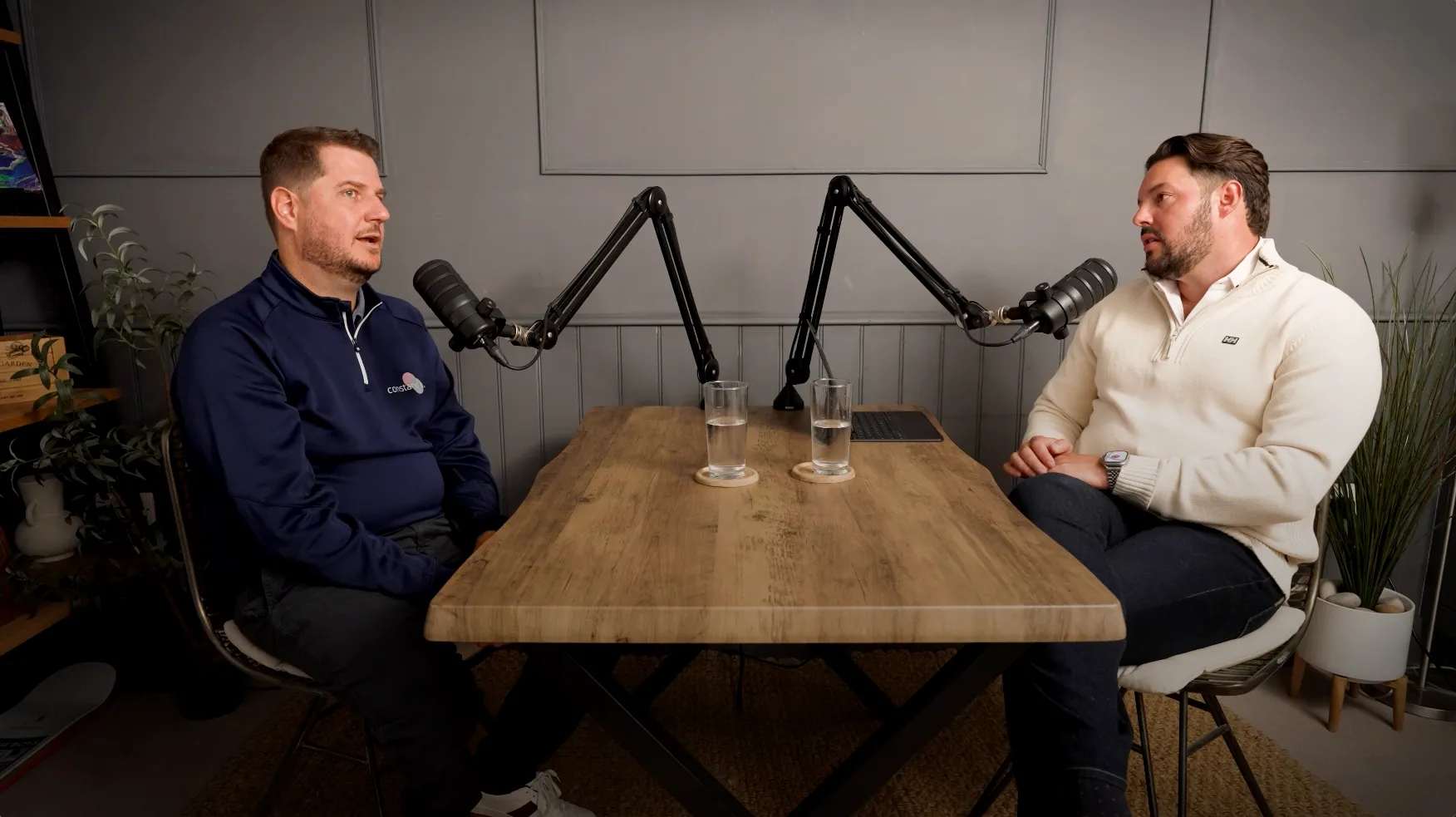
Latest episode
We survey how your ownership table, your rate table and your intercompany balances are held before we quote. The price is fixed on what the survey finds.
Financial consolidation takes every entity's closed ledger, applies ownership, translates the currencies and removes the intercompany trade to produce 1 group result. Constancia is an EPM consultancy that builds that consolidation for multi-entity groups with a legacy platform and a date to close by.
IFRS 10 sets 3 tests for control: power over an entity, exposure to its returns and the ability to use that power over those returns. The ownership table in the data model records which of the group's entities pass all 3, and at what percentage.
Where a group bought 3 subsidiaries in 3 different years, the consolidation workbook usually still holds the ownership percentage from the year of each purchase. The group financial controller learns which percentage has since changed when the auditor asks why the minority interest moved.
Each join lives in a workbook in most groups we survey, and each workbook has 1 author.
Every entity carries its percentage held, its consolidation method and the date each of those last changed, in the model rather than in a workbook. A change in ownership is then a dated entry that the next close picks up on its own.
The rate table holds the closing rate, the average rate and the historical rate for each currency and period, and 1 person owns it. Every translated balance then traces to the rate it used, and the translation difference lands in reserves where IAS 21 puts it.
Each entity books its side of a transaction in its own ledger, and the 2 sides differ by timing, currency or an unsettled dispute. The consolidation matches the pairs, posts the difference to a named account and eliminates the balance the 2 entities agree on.
We sit through 1 close and read the ownership table, the rate table and the intercompany matching as your team runs them.
We fix the build price on what the survey found, so an entity whose ledger failed to reconcile is already priced in.
The design document names the entity dimension, the account hierarchy, the ownership table and the rate table, with 1 owner and 1 date against each.
The consultants who ran the survey build the eliminations, the translation and the ownership adjustments in OneStream (EPM software), with no handover between.
The new consolidation runs beside the old one, close by close, until the difference between them is zero and your group financial controller signs.
Constancia has completed 58 implementations over 35 years, and the same people carry each one from the survey to the parallel run.
The entities close in 2 or more ERPs, and somebody maps each chart of accounts to the group chart by hand.
Read about close automationHFM, BPC or IBM Controller still produces the group result, and its vendor has published the date support ends.
Read about migrationsAn IPO, an acquisition completing or a first group audit is already in the diary, and the current close will not reach it.
Read about statutory reportingThe matching and the eliminations run in a spreadsheet that 1 person maintains, outside the system the auditor tests.
A single entity closing in 1 ledger has no consolidation to build, and its ERP already produces the accounts it files.
Constancia is an official OneStream partner with certified consultants, and Abacum (FP&A software) takes the plan once the consolidation is settled.

Latest episode
Every Sunday, 6am
Our weekly newsletter on AI in finance.
Yours to enjoy with your Sunday morning coffee.
The people who would do the work read every message and reply inside 2 working days.
Free guide
Get our AI in finance predictions for 2027
Enter your details below and we will send a free copy to your inbox right now.
Check your inbox for your copy of the predictions.
We use cookies to improve the site and measure our adverts.Read the cookie notice
Strictly necessary
Keeps the site working and remembers these choices. Always on.
Statistics
Counts visits and the pages read, so we can improve the site. Never used for adverts.
Advertising
Lets Google and LinkedIn measure our adverts and show them to people who have visited.