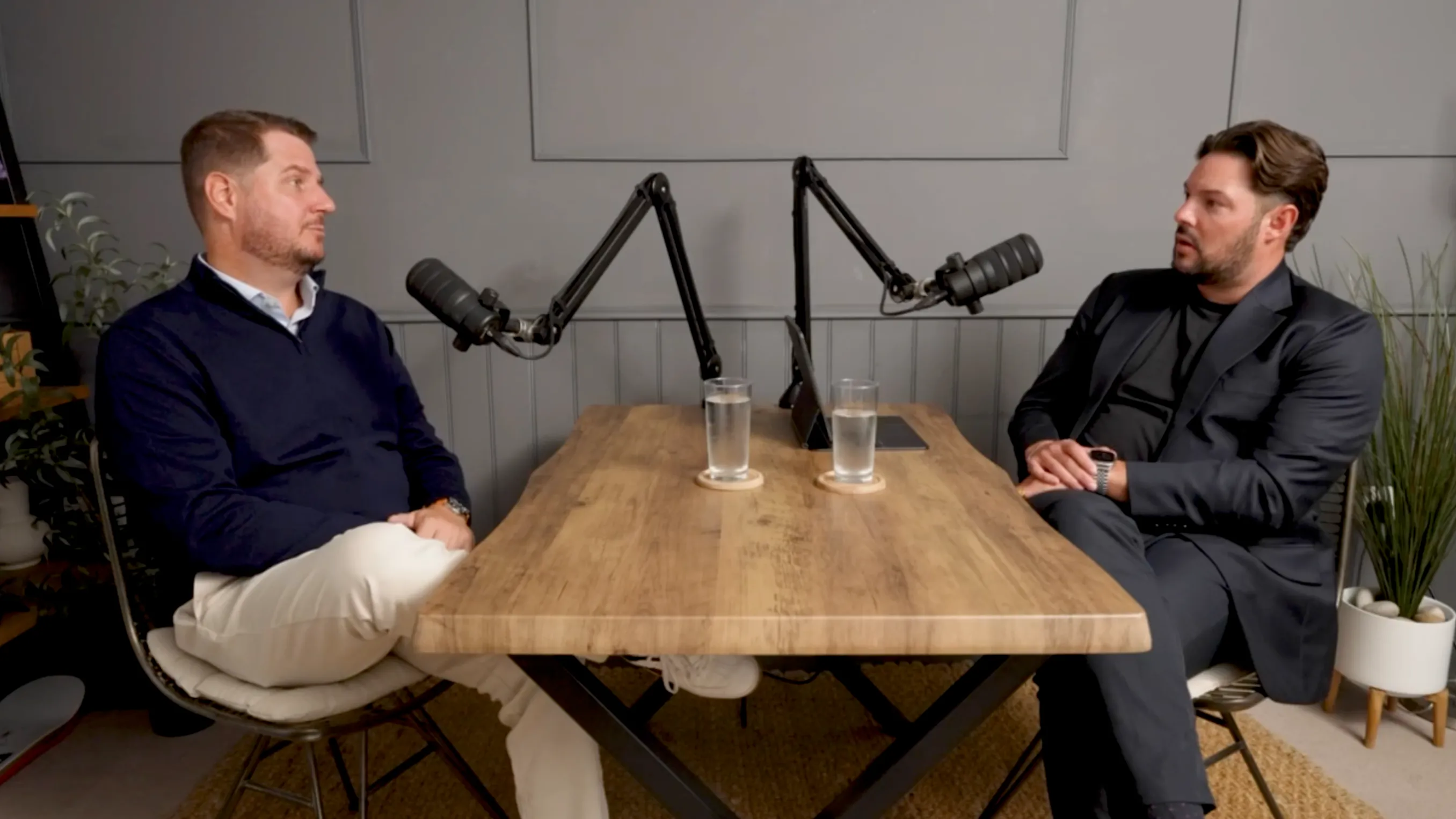
Latest episode
EPM software sits above a group's ERPs and runs the close, the consolidation and the plan. We have built it 58 times.
Enterprise performance management turns the ledgers of a group into 1 close, 1 plan and 1 board pack. The software sits above the ERPs. Groups with several entities buy it when an old consolidation system loses vendor support, or when the board asks for numbers the spreadsheets cannot carry.
Each entity finishes its ledger to a calendar, and the group controller collects 12 trial balances that agree to 12 ERPs.
Currency translation, intercompany eliminations and ownership adjustments turn those trial balances into 1 group result.
The budget and the rolling forecast use the same accounts as the actuals, so a variance points straight at a ledger.
The board pack reads the consolidated result and the plan from 1 model, and every measure on it has 1 definition.
Profitability by product, customer and entity comes off the same model, using an allocation rule somebody has signed off.
A 12-entity group planning in a workbook, closing in 3 ERPs and consolidating in HFM has 5 people keeping 5 copies of the entity list.
| The ERP | The EPM platform | |
|---|---|---|
| What it records | Every transaction of 1 legal entity: invoices, payments, payroll and stock. | The balances of every entity, translated, eliminated and added into 1 group result. |
| How many a group runs | 1 for each entity or each acquisition, so a group of 12 entities often runs 3 or 4. | 1 for the whole group, reading every ERP beneath it. |
| Who owns it | IT and the finance team of each entity. | Group finance, from the controller to the FP&A team. |
| The close it runs | The entity close: accruals, depreciation and the trial balance. | The group close after the ledgers: intercompany matching, translation, eliminations and the pack. |
| The plan it holds | A budget for the entity, in the ERPs that carry a budget module. | The budget, the forecast and the scenarios for the group, on the same accounts as the actuals. |
| What changes it | A reimplementation, when the business outgrows it or the version reaches the end of its life. | A new entity, a new account or a new reporting requirement, added by finance. |
| Examples | SAP S/4HANA, Oracle Fusion, NetSuite and Microsoft Dynamics. | OneStream (EPM software), Oracle EPM Cloud, CCH Tagetik and Board, with HFM and BPC as the legacy generation. |
The EPM software most UK groups come across is OneStream, Oracle EPM Cloud, SAP group reporting, CCH Tagetik from Wolters Kluwer and Board. All 5 sell the close, the consolidation and the plan, and each prices them in its own way.
The older generation is Hyperion (Oracle's legacy EPM suite), SAP BPC and IBM Controller, and each vendor now sells a cloud successor. Oracle Premier Support for Hyperion 11.2 runs through at least 2033, and that is the date to put in a business case.
The 2 generations differ in where the model lives. In HFM and BPC the consolidation, the plan and the reports were often 3 applications with 3 copies of the metadata. Today's platforms run all 3 on 1 model.
Corporate performance management (CPM) is the older name for the same category. Analysts used it before EPM became the usual term.
OneStream still sells a package called CPM Express to mid-market groups. The category is now often split in 2, with financial planning software on 1 side and financial close and consolidation on the other.
Some proposals treat CPM and EPM as different things. A good test is to ask which module changes when the word does.
An EPM implementation starts with 3 lists: the entities and their owners, the group chart of accounts and the calendar each entity closes to. The software is set up to match those lists, and agreeing the lists takes most of the time.
Each ERP then needs a mapping table to the group chart, with a named owner who updates it when the ERP changes. A group with 4 ERPs writes 4 tables before the first close runs.
The new consolidation runs beside the old one for at least 1 period. The difference between them is reconciled to zero before the switch.
EPM software pays for itself in a group that closes in more than 1 ledger, reports in 2 or more currencies and has a fixed date. A single entity with 1 ERP and a simple close can keep its spreadsheet for now.
An IPO, an acquisition on a deadline and a new CFO's first board meeting are the dated events that start EPM programmes. An ERP reimplementation or a board request for AI starts the rest.
In a group with 4 ERPs, each acquisition has brought its own chart of accounts, and 1 head office accountant keeps the mapping workbook.
In a multi-entity group, finance owns its numbers in the EPM layer, because the ERPs belong to IT and to each entity. Group finance builds the consolidation, the plan and the pack there from the ledgers beneath.
An AI project feeds the EPM layer into a model, and the model reads whatever definitions the layer holds. Gross margin defined 2 ways in the EPM layer comes out of the model as 2 margins.
We survey the entities, accounts and periods in every system before we price an EPM programme. The price is then fixed on what the survey finds.
CPM is the category's older name, and OneStream's CPM Express still carries it.
Read about CPMFP&A is the forward-looking half of EPM, with budgets, forecasts and scenarios built on the same accounts as the actuals.
Read about FP&AAn EPM programme has 6 pieces of work, and we price them after we survey the data model.
Read about EPM consulting
Latest episode
Every Sunday, 6am
Our weekly newsletter on AI in finance.
Yours to enjoy with your Sunday morning coffee.
The people who would do the work read every message and reply inside 2 working days.
Free guide
Get our AI in finance predictions for 2027
Enter your details below and we will send a free copy to your inbox right now.
Check your inbox for your copy of the predictions.
We use cookies to improve the site and measure our adverts.Read the cookie notice
Strictly necessary
Keeps the site working and remembers these choices. Always on.
Statistics
Counts visits and the pages read, so we can improve the site. Never used for adverts.
Advertising
Lets Google and LinkedIn measure our adverts and show them to people who have visited.