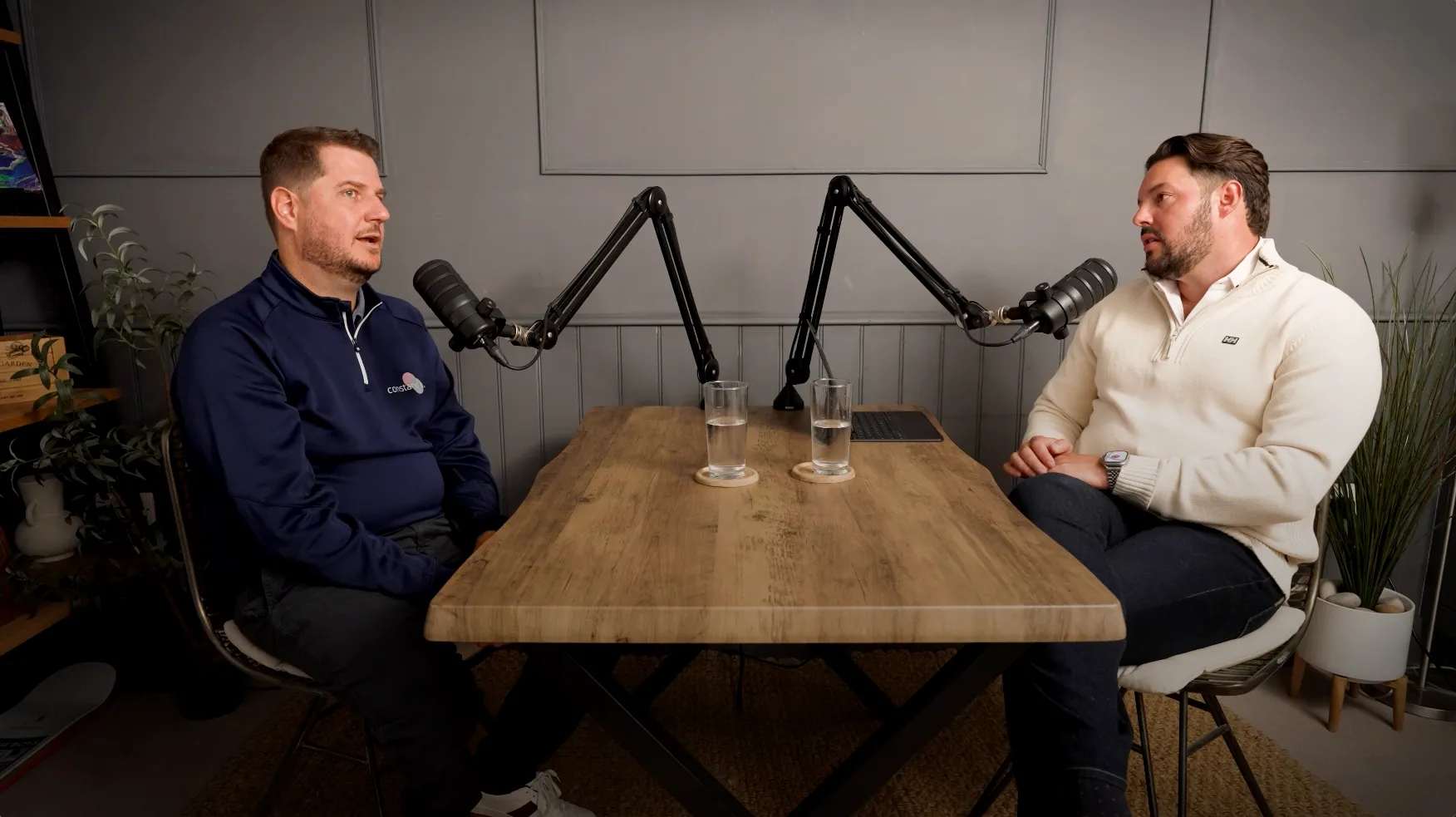
Latest episode
We read each entity's ledger, mappings and workbooks, then hand back findings with an owner and an order against each one.
A data assessment for finance tells a multi-entity group with a date for AI which of its finance data a model can read today. Constancia, an EPM consultancy, reads it entity by entity, because a group that closes in 6 ledgers has 6 answers to that question.
Each entity is read in the order it closes, and the group office is read last. A group of 12 entities on 3 ERPs takes 3 reads of the export format and 12 of the mapping.
Each ERP releases its trial balance at its own grain, and we record what the export holds and what it leaves behind.
Every local account maps to a group account somewhere, and we find whether that mapping lives in a system or in a workbook.
Each entity's intercompany balance is matched against its counterparty's, and the unmatched ones are listed with the entity that owes the explanation.
3 entities that book the same customer under 3 names give a model 3 customers, and we count every case of that kind.
The last mile of most entity closes runs in 1 person's spreadsheet, and we name the person and the spreadsheet.
We ask who would sign each entity's numbers if the group auditor challenged them, and write the name or the gap beside the figure.
An entity with 2 ERPs is read twice, once for each ledger.
Our consultants have opened entity ledgers on 58 implementations over 35 years, and we count the names 1 customer carries first.
Where 3 subsidiaries book the same customer under 3 different names, the group report shows 3 customers and the sales director recognises 1.
The group controller finds the third name when a model is first asked for revenue by customer, and the model reports it 3 ways.
The boundary is agreed with the CFO before the first entity is opened.
We read each ERP, each mapping and each workbook in the entity that runs it. Every finding names an entity, an owner and its place in the order.
A score against a generic scale gives the board a number and gives nobody a task. Each finding we hand back carries a name and a place in the order.
Both outputs answer the board's question, and the second one also starts the work.
| A maturity score | A list of findings with owners | |
|---|---|---|
| What the board receives | A number between 1 and 5 against a published scale. | A list of what fails in which entity, and who fixes each item. |
| What happens the following week | A workshop to agree what the number means. | The first 3 findings start, each with a named owner. |
| How the entity teams read it | As a verdict on the group, with no line about their own ledger. | As a page about their ledger, their mapping and their workbook. |
| How it prices a build | The estimate from the budget round stands, because a score prices nothing. | The findings set the order and the fixed price covers them. |
| How it ages | The number is repeated a year later and compared. | Each finding is closed by its owner and dated. |
The survey of the whole data model, from the consolidation down, before any price is agreed.
Read about the readiness assessmentThe findings put in the order the data model can bear, with a date against each phase.
Read about roadmappingWhere the findings point at the consolidation, OneStream (EPM software) is 1 of the 2 platforms we build on.
Read about OneStream
Latest episode
Every Sunday, 6am
Our weekly newsletter on AI in finance.
Yours to enjoy with your Sunday morning coffee.
The people who would do the work read every message and reply inside 2 working days.
Free guide
Get our AI in finance predictions for 2027
Enter your details below and we will send a free copy to your inbox right now.
Check your inbox for your copy of the predictions.
We use cookies to improve the site and measure our adverts.Read the cookie notice
Strictly necessary
Keeps the site working and remembers these choices. Always on.
Statistics
Counts visits and the pages read, so we can improve the site. Never used for adverts.
Advertising
Lets Google and LinkedIn measure our adverts and show them to people who have visited.